Saturday, January 4, 2014

Being Good in the Kitchen

A couple of new eco-conscious products I'm trying this month:

Clean Ones Pure Comfort reusable vinyl gloves are latex-free, BPA-free and phthalate-free.  I'm not personally allergic to latex, a natural material from a rubber plant.  But those who are can go into anaphlactic shock, so it seems like too big a risk to have them around.

Another product I'm trying this month is Seventh Generation's dish soap.  I've avoided it until now because it's pricey, but I found a great deal on Amazon.com - six 25 oz bottles for $15.48.  That's just over $2 a bottle.  I'm probably going to give away five of the bottles and ask that people try the product and then buy a refill product to use in the bottle, because I object to the disposability.  I think they should either concentrate this product or offer it in larger quantities so that we can refill one bottle.  Shipping small bottles is transportation-excess and creates too much CO2.  I did find a 36 oz refill, and although the packaging is lighter weight than the bottles, it's not different enough size-wise to make the transportation-reduction impact a larger-sized refill - or even better, a concentrate product - could make.  If someone knows whether Seventh Generation has a concentrate in this product, please let me know.  I didn't see one on their website.


Sunday, August 11, 2013

Tuesday, July 3, 2012

Huge Health Care Costs or Boomer Hooey?


The answer to that question is apparently up to us.


I've been working on a research project dealing with health care opportunities - nothing at all to do with Obama Care - just a small piece of contract work that's part of a bigger economic development research project.  


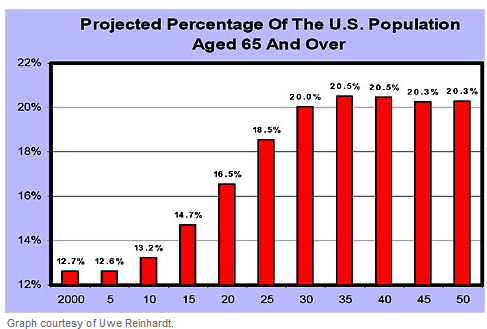
I want to share an interesting bit from my research.  The reason I'm posting it is because the data I've reviewed suggests that we CAN control health care costs, and that the aging of our boomer population doesn't have to have either the frightening cost correlations the nation is anticipating, nor the even more fearful prospect - for boomers like me, anyway - that old people will have to go without treatment.  Citations are all fairly to very recent, and mostly institutional - Deloitte, World Bank, WHO, etc. - or peer reviewed journal studies.  


"Health care is a multi-trillion dollar expense world-wide.  The World Health Organization [WHO] reports that 2011 world health care costs were at $6.5 trillion in U.S. dollars, with eighty-four percent of that amount spent on only 18 percent of the world’s population, in the wealthier 34 countries belonging to the Organization for Economic Cooperation and Development [OECD].  Spending across all WHO member nations averages $4380 per person, or approximately 12.4 percent of the national GDP, but those figures are misleading because the range among countries is quite extreme.  Average per person spending on health care ranges from a high of $8,362 in the United States to $12 in Eritria.   Countries in the African region spends about 6.5% GDP, South East Asian region spends 3.7 % GDP, or $83 U.S. dollars and $ 48 U.S. dollars respectively.3


Health spending is rising everywhere, but most notably at the wealthiest OECD countries where health spending exceeds GDP growth substantially. To understand the rate of growth, in 1960 health spending accounted for under four percent of GDP on average across OECD countries. By 2009, the average had risen to 9.6 percent, to a high of 12 percent in several countries.  The United States, the outlier, spent over 17 of its GPD in 2009.  Interestingly, looking at outcomes shows very little correlation between better outcomes and marginal increases in health care spending, suggesting that increased efficiencies are necessary to ensure maximum benefit from health care expenditures.12

It is anticipated that the cost of health care will continue to rise.  Although aging is often the reason cited, it is important to note that aging per se is not the most important factor in rising health care costs.  The aging of the population by itself adds approximately half a percentage point to the annual growth in per capita health spending in industrialized societies.26    Instead, data shows that the most significant health spending occurs in the proximity to death, regardless of age of death.  In fact, health care near death tend to be higher for the young and middle aged than for elderly people.22   It is inevitable that there will be a growing number of elderly deaths in countries with a aging population, due to costs associated with the pre-death years.  Yet the importance of drilling down into the actual cost sources - rather than labeling the problem one of aging – makes the difference between a sense of the inevitability of rising health care costs, as opposed to focusing health care policy, practice and research on specifics that can reduce costs dramatically - predictably enough to offset the sheer numbers due to aging.  If the structuring and choice of medical treatment for patients near the end of life can be controlled through preventative care, managed care, reduced expense technologies, shifts in health service provider training, long-term shared funding mechanisms, and other mechanisms, then aging per se does not need to have a disproportionate bearing on health costs.24

By way of example, technological progress since 1998 has reduced the number of overnight hospital admissions in favor of day admissions and clinic visits, and reduced stay length.  Technology has enabled in-office detection and treatments of some diseases, such as diabetes, further reducing hospital admissions and costs.  The integration of care programs, such as cardio-specific treatment units, has also impacted costs by bringing specialists, best practice treatment protocols and equipment into one location.25   Conversely, costs associated with pharmaceutical uses have driven end of life costs up significantly over time, and bringing drug prices down should be a future focus for research and innovation.24.  

Identification of high cost drivers can focus policy-makers, health care systems and researchers on areas high impact for both policy and practice change."


Here is another depiction of the first graph, just for fun.  Look how much less frightening it looks if you don't put 22 percent at the top of the chart, but look at the growth of our aging population on a 100 percent scale.


By the way, here is another little tidbit from my research that might be interesting to share:

"All countries except Chile, Mexico and the United States finance health care primarily through the public sector.  On average, over the past 20 years, the public share of health spending has remained at about 72 percent of total health care costs.  However, this average is somewhat misleading, as health care reform attempts in some countries have impacted that percentage downward, while the expansion of public health insurance coverage has nudged it up elsewhere.  Interestingly, spending more per capita is only nominally correlated with life expectancy, suggesting improvements are still needed to tie better health care outcomes more directly to additional moneys spent."12

I don't have time right now because it has nothing at all to do with my research project, but eventually, I'd like to take a look at the other two privately-funded health care systems, in Chile and Mexico, and see how it's working for them.  Below is a chart demonstrating the gap between the U.S. and other industrialized countries. 


3.      Etienne, C. (2012). World Health Expenditure Atlas. Geneva: WHO, http://www.who.int/nha/atlas.pdf.

12.   www.oecd.org

22.      Oliveira Martins, J., & De la Maisonneuve, C. (2006). The drivers of public expenditure on health and long-term care: an integrated approach, http://www.agri-outlook.org/dataoecd/62/19/40507566.pdf

23.  Gottret, P. E., & Schieber, G. (2006). Chapter 1: Health transitions, disease burdens, and health expenditure patterns Health financing revisited: a practitioner's guide (Vol. 434): World Bank Publications, http://siteresources.worldbank.org/INTHSD/Resources/topics/Health-Financing/HFRChap1.pdf

24.  Palangkaraya, A., & Yong, J. (2009). Population ageing and its implications on aggregate health care demand: empirical evidence from 22 OECD countries. International journal of health care finance and economics, 9(4), 391-402.

25.  De Meijer, C., Koopmanschap, M., Van Doorslaer, E., & O'Donnell, O. (2012). Health Expenditure Growth: Looking beyond the Average through Decomposition of the Full Distribution, http://repub.eur.nl/res/pub/32666/2012-0513%5D.pdf

26.      Reinhardt, U. E. (2003). Does the aging of the population really drive the demand for health care? Health Affairs, 22(6), 27-39, http://142.36.155.4/cmt/39thparl/session-4/health/submissions/Reinhardt_Does_The_Aging_Of_The_Populations_Really_Drive_The_Demand_For_Health_Care_2003.pdf

Thursday, June 7, 2012

Measuring Community Sustainability


How do you know whether your community is truly making progress on the march to Sustainable living?

You can get a whole lot better at answering that question with the right measuring tools. One of the resources I use with my sustainability classes is freely put out by an organization called "Whole Measures." Whole Measures is a "tool center" for Whole Communities developed to help communities describe and measure the relationships they want to foster between land and people. It employs a highly integrated, whole systems approach that looks at a variety of communal and environmental issues, including biodiversity, social equity, human rights, civic engagement, and landscape-scale conservation.

If your organization is looking for such tools, you might consider attending one of the Whole Measures Workshops. They are being held Tuesday, July 10 through Friday, July 13 at Center for Whole Communities, Knoll Farm, Vermont, and again Tuesday, December 4 through Thursday December 6 at Interaction Institute for Social Change in Boston, Massachusetts.

Click here to be wisked to the Whole Measures website and workshop information.

Thursday, May 3, 2012

Of Wine, WiFi and a Way Forward

I am a person who rejects these four little words:

"It can't be done."

While I do occasionally spin my wheels trying to figure out how to cross a bridge that's just not there, for the most part, I have come to believe that human creativity, passion and good faith is a recipe for problem-solving.

So, when I think about solving the big, big problems facing our planet right now - whether it's the huge economic crisis, world hunger, the AIDS epidemic, climate change or whatever, I believe in outside-the-box thinking.  I believe in turning a problem over and over and over until it no longer even looks like the original problem.  Creative re-imagining.  That makes it easier to solve.

What do I mean by that?  Well, we all have ideas about how things can and will work - preconceived notions.  These preconceived notions act as mental blocks.  They get in our way of finding novel solutions.  To get around our preconceived notions, we have to change the way we look at a problem, so that it doesn't look like the "same old problem," so that our same old beliefs about solving the problem do not trigger.

So, you ask, how does one "turn a problem over and over until it no longer looks like the original problem"?  Have you ever said a word over and over so many times that it no longer held meaning for you?  It's something like that.  Only instead of stating the problem over and over again, you state the problem from a different angle.


Anthony Weston, a philosopher who's books I use when trying to teach outside-the-box thinking to my students and nonprofit clients, uses the example of a woman who will die if she does not get a particular medication, but the medication is so expensive that her family cannot afford it.  The husband goes to the pharmacist and pleas for his wife's life.  He offers everything he can scrape up, after selling all their worldly belongings, but it is not enough, and the pharmacy refuses to sell.  The husband's dilemma:  to steal the medicine or watch his wife die.

Most of my students immediately go to the preconceived choice set:  an ethical discussion about whether stealing might be permissible in this case.  Rather like the conversations we had about folks whose lives were washed away by Hurricane Katrina, and so took food from abandoned stores in order to feed their families.  Which is the greater bad?

But Weston points out that we are not actually stuck with this "either/or" choice.  When he's encouraged his students to think outside the box, they've come up with really novel solutions ranging from starting a nonprofit to make grants to people who cannot afford medication, to having the wife steal her own medication, and steal it as clumsily as possible, so that when she gets caught and goes to jail, she will receive the medical care she needs.  Prisoners get medical care at the state's expense!

Another exercise that helps people get creativethink outside the box:  how many uses can you come up with for a paperclip?  When I group students and ask them to tackle that question, we get great lists.  Groups might come up with 15 or even 50 ideas.  But that's it.  If I then ask them to rethink the paperclip, e.g. What if the paperclip is two feet tall?  What if the paperclip could float?  What if the paperclip could fly?  What if the paperclip were made out of rubber?  Suddenly their lists grow exponentially.  It's simply a matter of removing their self-imposed limitations.

There are some great folks out there already thinking outside the box on some of our most difficult problems.

Take, for example, microfinancing.  Somewhere along the way, some really creative folks got the idea that people could be helped out of poverty with very small loans - just enough to purchase something that they could resell for a profit, and then repeat the cycle until they had enough profit coming in that they no longer needed the loans to make their wholesale purchases.  However, traditional lending institutions do not lend money to indigent borrowers.  Traditional lending institutions have criteria for lending that significantly reduces risk, and so do not lend to folks who do not have either a lot of collateral or a history of repayment.  Into this void stepped nonprofit organizations like Accion International and Grameen Bank and others who offer small loans and business training to the poor.

Another example of out-of-the-box thinking at work:  I have become friends with the vintners at Peterson Winery, who produce a superb product, yet manage to keep their bottle prices lower than some of the other local wineries whose product is on par with theirs.  One of the ways they do that is to "sell futures" in their wine.  Faithful customers who trust the Petersons' wine making acumen are given the opportunity to buy Peterson wines in advance, at a discount.  This is happy for everyone.  The Petersons are, in effect, taking loans from their customers, free of interest, to cushion their operating costs until the wine is ready for purchase.  The customers get a bargain, not to mention interest-free money helps the Petersons keep their wine prices down.

What started me on this little out-of-the-box diatribe this morning?

Well, two great out-of-the-box ideas that make a big difference, from FastCoExist.com, showed up in my email this morning.

The first idea is a cross between the microfinancing banks and the Petersons' customer pre-funded purchases.  "Credibles" turns consumers into lenders, who in effect pre-fund their favorite slow food businesses, and then get their loans repaid in product. The difference between Credibles and Peterson Winery is that lenders may take repayment in product from any of the slow food businesses participating in the Credibles program.

The second is a really, really funny, very, very clever out-of-the-box solution, is a new idea for convincing Mexico's dog owners to pick up their dog's poo.  The parks agency has installed poo containers that, when the contents reach a certain weight, turn on free wi fi for the entire park.  This encourages not only dog owners, but others who want wi fi, to don a plastic glove and clean up the park!  Now I call that truly creative thinking.

No need to limit all this creativity to fixing the world, however.  If you think you might want to get better at creatively solving your own problems, I strongly suggest Anthony Weston's book, How to Re-imagine the World.   


And here's a video advertising Poo Wi Fi.  It's in Spanish, but never fear.  You will NOT need to understand the language to fully follow what's going on.  Enjoy!


Monday, April 30, 2012

Decoupling

No, I'm not talking about breaking up with your significant other.

I'm talking about the 2011 Report from the International Resource Panel's Work Group on Decoupling.

This report details the linkage between the extraction of finite resources - fuel oils, ore and minerals, and other construction materials - and both the economics of certain nations, and the earth's environmental well-being.

There are basically two concepts here, "resource decoupling," and "impact decoupling."  Resource decouping means getting more efficiency from the resources we use, so that we can spread the use of our finite resources out over a longer time frame.  Impact decoupling means using processes that leave a smaller footprint on the ecosystem, so that our building and manufacturing do not harm the ecosystem.  We need a healthy ecosystem for our own survival.


Check this first chart for an illustration of this idea, which is really to help you get what they're saying, but isn't tied to the data.

This concept might have been defined first by the World Business Council for Sustainable Development, who advocated for “competitively priced goods and services that satisfy human needs and bring quality of life while progressively reducing environmental impacts of goods and resource intensity throughout the entire life cycle.”


The problem is... both our own desire to have more stuff, and the profitability for corporations in the extraction business create disincentives for decoupling.  Check this second chart.  It shows the exponential increase in extraction, and of the GDP.  Coincidence?  IRP doesn't think so.


I'll just give you one more interesting factoid before leaving you to read the report, which you can find by clicking this sentence.

As we've gone global, exporting a bunch of jobs from higher wage countries like the United States to lower wage countries like India, China, Turkey, and others, third world economies are starting to grow.  In some ways, this is good.  It means more resources in poor countries, and less hungry people.

In some ways, however, it's bad.  It means that more people in those third world countries are able to afford more of the consumer goods we've long enjoyed.  And that means more resources.   For example, China's use of copper, a metal used in everything from construction to technology to communications to medical equipment and supplies, has increased at a rate of 15 percent a year over the past several years - absorbing far more of both newly refined and recycled copper than either the European Union or the United States.

The report says that, for us to get to a balanced use of raw materials - an efficient use that preserves raw materials for future generations - we would need to bring the per capita metal use down to between 4 and 6 tons per person over the course of his or her life.  To put this in proportion, some developing countries, like India, are using about 5 tons per person right now, while Canada uses 25 tons per.

I know that some will argue with this amount, and frankly, I'm not endorsing their number - just reporting it.  Many moving parts impact how these numbers are built.  Extracting raw materials depends on many variables.  Three of the biggies:  Amount of resource both discovered and retrievable, business climate and technical feasibility.

Resource availability:  Despite all the money tossed at the problem of predicting and then locating resource, nobody is sure exactly how much extractible materials really exist.  And, finding it doesn't guarantee accessibility.  Ore depth can impede extraction, both because in some cases the technology doesn't (yet) exist, and in other cases, the ore quality (grade) is low, and extracting it is either difficult or not financially feasible.

Business climate:  Productivity is driven by demand, which in turn is impacted by the economy.  In a good economy, there will be more demand for product.  In a bad economy, people will demand less - and be willing to pay less.

Technical feasibility:  In some cases, improvements in technology can reduce the price of extraction, and make it feasible to extract and refine more raw material.  But in other situations, the high cost of advanced technology can make the technology relatively useless, particularly in an economy like the one we're currently in.

So, given that disclaimer, the important point is not the exact amount.  What if it's somewhere between Canada's 25 tons and India's 5 tons - let's say 15 tons instead of the dire 4 to 6 tons called for in the report?  If all the third world countries with rising economies increase their usage to 15 tons per capita, we'll be out of extractible resources before we know it.  And I haven't even touched on the increasing damage to the ecosystem of exponentially increasing use.

There's another interesting danger that comes with the hyper-fast increase of resource exploitation, one that principally impacts the countries who are at first benefiting from the mining and sale of these resources.  This danger is called Dutch Disease.  Dutch Disease is a concept coined by the  Economist Magazine in 1977 to explain the relationship between a country's increased revenues from natural resource exploitation and the decline in that country's manufacturing sector.  A natural resources revenue increase will make a nation's currency comparatively stronger than other nations' currencies,  As a result, the nation's other exports become more expensive, and its manufacturing sector less competitive.  Pop goes their economy!

Frankly, I was not aware of these linkages.  We need to support our governments' efforts to decouple, but we also need to realize that the extraction industries see this idea as a negative.  They would feel they have a lot to lose by decoupling - they have put a lot of money and resources into planning for the future of extraction (sunk costs), and they will have pressure (and fiduciary obligations) to create as much profitability as fast as they can.  And there are entire communities relying on the extraction industry for their livelihoods and well-being.  It would be great if we could hold extraction at current levels, and take a longer range perspective.  There are advantages to spinning extraction out across many generations... but this will not be an easy problem to solve.

I know that most people who read this blog are already concerned with the environment, and the few of my friends who believe that environmentalists are over-blowing the problem will poo poo this anyway, if they bother to read it all the way through.  But maybe you don't know that much about the way minerals impact the ecosystem, or the well-being of humanity.  This report is a really good way introduction, in lay language.

It's worth the read.

Friends Without Carbs!

The other night, I invited a small crew of old friends to dinner.  By old, I mean some of us have known each other for going on 30 years.  The first guest I will mention we will call Mr. Linchpin, because I planned the dinner for and around him.  I met Mr. Linchpin in Young Democrats back when I was 24 years old.

The second and third guests are husband and wife.  The husband just happens to be pals with Mr. Linchpin.  I met him at 25, when his mom was scheming to undo his relationship with a shiksa.  She invited me to Passover seder hoping (unbeknownst to me) I'd interest him enough to throw over his then-girlfriend.  The ruse was a quick flop, because it turned out that I already knew his girlfriend.  That girlfriend became his wife, and she is guest number three.

The fourth old friend I've known probably since I was about 30, because she and I were both assisting the same nonprofit organization.  I was their lobbyist.  She provided pro bono legal advice.  And funny enough, by that time, the Mr. Linchpin happened to be the president of the organization's board and guest number three was an employee there.  It all makes you want to break out into Disney's "It's a small, small world."  

Fortunately, we didn't spend too much time fa-de-la'ing down memory lane.  The come-lately's at the dinner, Mr. Linchpin's lovely wife, my own boyfriend and a dear friend I met about two years ago who also just happens to know the Linchpins, were quite tolerant of the short little forays occasionally made.

Oh, gee.  I almost forgot to mention why I planned a party for the Linchpins.  They bought themselves a new 3G iPad for the holidays, and bequeathed their still-perfectly-working 2G iPad to me.  They decided I needed to enter the iGeneration.  I decided I needed to feed them.  How else to properly thank them?

Wow, sometimes I get way off track.  The original purpose of this blog was to share a recipe for low carb cupcakes - no processed sugar or flour at all - that were delicious.  The Linchpins are vegetarian and Mr. Linchpin is on a low carb diet.

Of course, so am I.  These days, if you pick your diet by reading everything out there, you'll be on one low carb diet or another.

Normally, I'd have simply made a carb-free sorbet in my awesome Cuisinart ice cream maker, but my freezer tub stopped freezing, and the replacement I purchased on Amazon.com, despite looking identical, is apparently for a larger model.

As it happens, it's a lucky thing the ice cream maker is down, because I settled on these cupcakes, and they were delicious.  What a far cry from the dry, Passover matzah meal dessert I was afraid they'd be!  To be safe, I drizzled them with low carb (but, I'm afraid, decidedly not low fat) lemon ricotta drizzle and garnished them with strawberry slices.  Yum.

It was all very comforting, to be hanging out, enjoying a meal and laughing hard with really good friends.

Vanilla Almond Flour Cake
3 eggs, separated
¼ c oil
½ c honey*
1 tbsp vanilla extract
1 tbsp lemon juice
2 ½ c almond flour
½ tsp salt
½ tsp baking soda

*Sub out the honey for estevia and add 1/2 cup of other liquid.  I used unsweetened almond milk.

Preheat oven to 350.  Line 10 muffin tins.  Whisk egg yolks in large bowl till pale.  Whisk in oil, honey, vanilla & lemon juice.  Combine the dry ingredients into the yolk mixture.  In separate bowl, beat egg whites until siff peaks.  Fold whites into yolk mixture.  Scoop batter into muffin tins.  Bake 20-30 minutes until golden brown, toothpick comes out clean.  Let cool for half an hour.

Lemon Ricotta Drizzle
1 1/2 cups fresh, whole milk ricotta
2 ounces cream cheese, at room temperature
1/3 cup sugar
1 teaspoon vanilla
1/2 cup freshly squeezed lemon juice
1 1/2 teaspoons finely grated lemon zest
1/8 teaspoon salt
2 eggs
1/2 cup heavy cream

I worried that the lemon juice might curdle ricotta or cream, but in the interest of time and because I've never had an adequately developed aversion to risk, I put all the liquids together into a blender, including the eggs.  Then I creamed the cheeses together, and added them and the rest of the stuff very slowly.   It all worked beautifully and then I put it in the fridge and it firmed up enough to spoon over the muffins.  If you prefer the mixture firm up into custard, follow the directions below and reduce the lemon juice to just one teaspoon.  Frankly, I like the more lemony flavor better, but it won't firm to custard with that much liquid.  Maybe you could use the lemon juice in lieu of the heavy cream.  With the two cheeses, how rich does it have to be, really?  

Alternative recipe for custard:  Beat the ricotta and cream cheese together on low speed with the paddle attachment of a stand mixer until smooth and creamy. Beat in the sugar, vanilla, lemon zest and salt and when it is incorporated add the eggs. Mix on low speed until smooth and mix in the cream.  Refrigerate until it firms up.

As usual, I got both of these recipes from cooking blogs and monkeyed with them so they're no longer the same recipes.  You can find the original almond meal cake recipe by clicking here, and you can find the lemon custard recipe by clicking here.

Monday, April 23, 2012

Which Salmon is the Healthiest for You?

When considering Salmon at a restaurant, I always ask the server whether the salmon is wild or farmed.  Farmed salmon have much higher levels of carcinogenic pesticides, specifically polychlorinated biphenyls (PCBs) and two other compounds, dieldrin and toxaphene) than wild caught.  This article by George Mateljan does a great job of laying out the case for avoiding farmed salmon.  I urge you to take a moment to read it.

Funny enough, the salmon in this picture, which I snagged from George Mateljan's wonderful website, World's Healthiest Foods, looks farmed.  One way to tell is the nearly perfect square shape of the fish, which means it has been cut into shape in processing.  I've never seen this preparation for wild caught salmon.


http://tinyurl.com/farmedsalmon


Thursday, February 9, 2012

From Me to We

"Most people today live a dream world, controlled by false perceptions and beliefs. The most deeply held illusion is that all organisms on Earth, including each of us, exist as independent entities. At the most fundamental level, the change needed to overcome our misperceptions is a shift from focusing only on “me” – our personal needs and wants – to also prioritizing the broader “we”: the many ecological and social relationships each of us are part of, those that make life possible and worthwhile. Research shows that by using the techniques described in this book this shift is possible – and not that difficult to achieve."


A quote from the new book, From Me to We, by systems change expert Bob Doppelt.  I am planning to read this book, and invite you to read it with me.  To learn more, click here, and then choose the "Description" link below the picture of the book.

Monday, December 26, 2011

Dogs for America!


Simon, world's pickiest pup when it comes to treats, loves these made-in-America delights! 


It dawned on me, as I was reordering these Carlson Morgan dog treats, that I shouldn't keep this product a secret.  My dogs absolutely love these treats, above and beyond even the over-priced bully sticks.  And this 32 oz container lasts a really long time.  I buy bulk at about $10.50 per container.

Simon's the little guy on the bottom of the heap.  
Lucy's on top.
These treats are healthy - grain free, made without added sugar or salt, no preservatives.  But they also have something else going for them - they're made in America.  Better for the environment because the product travels shorter distances to reach you, it's also become a necessity following reports of contaminated imported food products.  I spend a lot of time turning treat bags over to see whether the product is from China.

The kids also love Pampered Pets Peanut Butter and Honey treats.  These are also made in America (in a Chicago bakery!), are oat based, contain no wheat or corn, and very healthy.  Although we pretty much stick with the Peanut Butter because I can get it at Costco for $35 for two five pound bags, Pampered Pets makes a variety of other flavors.  Beware, I've seen these repackaged into small, airtight containers, and sold for much more money.

Lucy is a peanut butter fiend!
And, for those of you, like me, who are forced by circumstance to follow your dog around with a (biocompostable) doggie bag, I've noticed that some treats are easier on my pups' systems than others. The "kids" have had  no problems with either Carlson Morgan's or Pampered Pets treats.

And since I mentioned it, let me also recommend Bio Buddy, fully compostable doggie bags.  Don't be fooled by so-called biodegradable bags that degrade into teeny, tiny microscopic pieces of plastic.  Bio-compostable bags are vegetable-based plastics that compost just like any other vegetable.  You can find Bio Buddy bags here:  http://bio-buddy.com/

Saturday, December 24, 2011

Best gift for the person who has everything...

The person who has everything is also a person whose consumption patterns are depleting the earth's resources.  The perfect gift for an over-consumer is a donation to Carbon Fund, to offset their carbon use.   Click here to be taken to Carbon Fund's easy-peasy online donation application, where you can arrange for an off-set gift - and maybe some enlightenment - for all your well-heeled pals.

Tuesday, December 13, 2011

EU refuses to be held to a climate deal unless U.S., China & others are too


by Andrew Light
DURBAN — The expected end game of the international climate talks in Durban is shaping up to be a fierce stand off.

A showdown has emerged between the EU and other parties over their conditions for agreeing to a second commitment period of the Kyoto Protocol. The first commitment period will expire in 2012.  If it is not renewed the fate of the instruments that support the world’s fragile carbon market is uncertain.

Japan, Russia and Canada have all signaled that they are unwilling to continue with a second commitment of binding emission cuts for the treaty leaving only the EU ready to move forward.

But the conditions the EU has asked for at this meeting to preserve the Kyoto Protocol are steep.  In exchange for their commitment they expect everyone else – in particular the other large greenhouse gas emitters like the U.S., China, and India – to begin a roadmap for a process that will create a binding agreement on reducing emissions later in the decade.  What we now know as the “mandate” debate has pulled everyone into a discussion over the fate of the Kyoto Protocol — including the U.S., which is not a party to it.

While the fate of U.S. emissions is not bound to the fate of the Kyoto Protocol, the fate of many of the most important achievements of the Obama administration in this forum are now tied to Kyoto through the mandate debate.  Included in this list are the institutions that were created out of last year’s meeting in Cancun – such as the Green Climate Fund (tasked with mobilizing a large chunk of the promised $100 billion a year in climate financing by 2020) and the Clean Technology Center and Network – as well as progress they have made on pushing for a more rigorous system of transparency for measuring, reporting, and verifying (MRV) promises for emission reductions.

The dominoes could fall like this:  If the U.S. and other parties say no to the EU demand for a mandate on a process of a new binding agreement, then the EU could in turn say no to a re-commitment to the Kyoto Protocol.
If the EU passes on the Kyoto Protocol, then the G77 (representing most developing countries at this meeting) — which has been adamant in their insistence this year that the extension of the Kyoto Protocol was absolutely critical to them — could walk away. And if that happens then all parts of the climate architecture moving through this process could come to a halt. The result would be that the final negotiating text that has been worked out here on the Green Climate Fund, the Clean Technology Center, and MRV could be left abandoned with no possibility of approving it before the parties go home. We’d have to wait another year until these valuable institutions were potentially picked up again and made a reality.

With this much at stake, why would parties say no to the EU’s demands? The key is the insistence that the outcome of the new roadmap to emerge from this meeting end in a “legally binding” agreement.  The EU wants some assurance that they will not be the only countries bound by an international regime to reduce their emissions. Currently, all other parties that have registered emission reduction targets have only done so through their official submission to the Copenhagen Accord in January 2010 — which is not legally binding.

The EU is also concerned about the math and physics of the matter. If they are the only party to continue with the Kyoto Protocol then only 15 percent of global emissions will be bound under an international treaty. On the other hand, the combined pledges from the Copenhagen Accord cover countries representing over 80 percent of global emissions. If we’re going to get an agreement that binds everyone to a common set of rules and standards aimed at limiting temperature increase to 2 degrees Celsius, then a greater percentage of global emissions needs to be covered under a new instrument.

But so far there is little indication that the US, China, India and several other parties like the idea of signing onto this package. While no serious objections have been voiced about authorizing a roadmap to come out of this meeting that will continue work on a new agreement in a stipulated amount of time, parties disagree on the idea of agreeing ahead of time to a legally binding outcome for this process.

This week several parties, such as the U.S. and India, expressed reservations that they can enter into a process that guarantees an agreement a legally binding outcome when they don’t yet know what the content of the agreement would be. The U.S. has also repeatedly demanded for an all-inclusive binding target in order to craft a workable climate agreement. According to our lead climate negotiator Todd Stern, the U.S. is not necessarily opposed to a legally binding outcome, but rather to an outcome that, like the Kyoto Protocol, is binding only to some parties and not to others — regardless of the size, scale, and growth of their emissions.

The EU has been lock-step behind Connie Hedegaard, the EU Commissioner for Climate Action, who claimed in a press conference on Wednesday that parties who don’t commit to binding actions take on an “unbearable responsibility.”

But the insistence that parties agree on a process to create a legally binding outcome does not mean that those parties entering into negotiations have to say yes to anything that this process produces.

In an exclusive interview with Climate Progress, EU lead climate negotiator Artur Runge-Metzger explained that the EU was after something more akin to a couple getting engaged.  If two people get engaged, then they aim for a particular legally binding outcome.  As a process of achieving that outcome, they embark on a list of things to do – picking a date, a location, an invitation list, etc. – over a discrete period of time.  But as everyone knows, an engagement, even a good engagement, is not necessarily a successful engagement.

Engagements can even end at the altar.

Similarly, Runge-Metzger acknowledged that if parties agreed to a roadmap leading to a legally binding agreement they can pull out if it takes a turn to something they don’t want.  The U.S. has been clear that it will not tolerate an agreement that once again leaves China in the position of not having legally binding emission cuts while developed countries do.  If the U.S. agrees to the EU’s proposal for a roadmap toward a legally binding outcome, and it loses the fight during the creation of a new instrument somewhere along the way to ensure that the agreement is reciprocal, then it can drop out of the process.

Nonetheless, many parties are still wary of signing on to the EU process.  Right now, throughout the ICC, negotiators are hard at work trying to find the sweet spot between the preferred language for the outcome of a new negotiating process preferred by the EU and language and something that can garner more support.

This afternoon a new text was introduced from the South African hosts of the meeting floating a compromise.  Instead of initiating a process that leads to a legally binding commitment it would “launch a process in order to develop a legal framework applicable to all under the United Nations Framework Convention on Climate Change after 2020.”

Unfortunately, reports on the floor were that the EU would reject this language and it was changed just a few hours later at 1:00am to "launch a process to develop a Protocol or another legal instrument."  The reasons the EU might reject substituting "legally binding" for something else are certainly not without merit from the perspective of their aims in initiating this process.  After all, the current Kyoto Protocol is a legal instrument, that China has signed onto, but it does not bind China legally under an international process of scrutiny, review, and enforcement to report or reduce its emissions.  Similarly, the original treaty that created the UNFCCC is a legal framework, ratified by the U.S. Senate, but it does not require the U.S. or anyone else to reduce emissions.

As negotiators go back in to meeting rooms late into the night and try to hammer out a new compromise on the EU roadmap, the U.S. should aim to broker a deal to get to “yes.”  The stakes are far too high not to.
As long as the U.S. is absolutely clear on its conditions for signing onto a legally binding deal down the road, it can sign onto a roadmap for a legally binding instrument with fair warning to all parties that if conditions are not met the engagement will be off.  Some will worry that this could be the U.S. in Kyoto all over again.

In the run up to Kyoto, the U.S. worked hard to create a climate treaty.  But the U.S. Senate voted 95-0 months prior to Kyoto not to even consider ratifying a treaty that divided the world into two categories, requiring emission reductions for developed parties and not for developing parties — regardless of the size, scale, and trajectory of their emissions.  Since the U.S. worked so hard to shape that treaty it was a huge disappointment, and a blow to our international credibility to have to bow out of the process.

But this time around is not like Kyoto.  The U.S. has been perfectly clear the last three years that we will not accept a non-reciprocal, non-conditional agreement on emissions reductions from developing countries.   If our conditions are not met, then we do not have to sign on to the final product (just as any party can do if their conditions are not met).  On the other hand, if our conditions are clear then we can work toward an outcome that would make for an agreement that would pick up where the Kyoto Protocol and the Cancun Agreements will leave us off in 2020.
And if we don’t make a deal, and this meeting ends without an outcome, the Obama administration risks losing everything it has worked for over the last several years and the progress that has been made which, though unsatisfying to many, nonetheless gives us critical means for moving forward.

After all, whether the EU gets its way or not, the outcome over the mandate debate will not ensure that another ton of carbon gets reduced from the world’s overall emissions during this decade.  At best, the process the EU has proposed would lead to an agreement that would require reductions in emissions after 2020 given the time it will take to finalize a treaty and enter it into force.

On the other hand, the Green Climate Fund is the only measure that could overcome the twin “gigaton gaps” that exist from the pledges made so far out of the Copenhagen Accord.  As the Center for American Progress argued in a report published last year it is the key instrument for mobilizing the finance needed to increase the ambition of parties under the Copenhagen Accord as well as a critical means to provide directed financing to closing the gap between those pledges and a path by 2020 that gives us a chance of stabilizing at 2 degrees Celsius.

If this meeting collapses over the mandate debate then we risk the postponement, and worse, the abandonment of this effort.  It is not clear when we will get a chance again to put all the major carbon emitters on the road to a common effort.

Andrew Light is Associate Director of the Institute for Philosophy and Public Policy at George Mason University and a Senior Fellow at the Center for American Progress in Washington, DC.

Sunday, October 23, 2011

Just say "No" to rBGH.

"What would you do if I killed your rBGH story?" he asked. What he really wanted to know was whether we would tell anyone the real reason why he was killing the story. In other words, would we leak details of the pressure from Monsanto that led to a coverup of what the station had already ballyhooed as important health information every customer should know?

This really stinks.

Please read this story by Jane Akres on PR Watch.  Or watch the video below.


It's about Monsanto's successful campaign to have a report about the strong links between cancer - particularly breast cancer - and rBGH (recombinant bovine growth hormone) shelved, despite a tough fight by the journalists who put the report together.  rBGH is used in about half of all dairy cattle in the U.S., and research correlates its use to cancer.

According to Wikipedia, the United States is the only developed nation to permit humans to drink milk from cows given artificial growth hormone. Posilac was banned from use in Canada, Australia, New Zealand, Japan and all European Union countries (currently numbering 27), by 2000 or earlier. Read about rBGH and its health implications here.

Monsanto won this round, meaning women are the big losers.

Since that point, Monsanto sold the vaccine to a subdivision of Eli Lilly, a pharmaceutical company.

And please, insist on the label, "No rBGH," on all your dairy products.

Wednesday, September 14, 2011

Oh, the Cognitive Dissonance

AT&T is about to roll out plant-based packaging, according to an article in Environmental Manager.  The plastic is composed of up to 30 percent sugarcane-based ethanol plastic.    

Yay!  

On the other hand, I receive nearly daily emails from CREDO, a cell phone company that markets to politically progressive cell phone users by donating part of the profits of the service to politically progressive causes.  Their sales pitch contrasts CREDO's use of profits against two of its competitors, AT&T and Verizon.  AT&T, CREDO tells us, gave $426,000 to House and Senate Tea Party Caucus members, and Verizon gave $48,000.

What's an EcoGirl to do?


Thursday, August 25, 2011

Good Guide - Great Idea


I'm so impressed with the new tool bar tool that gives you information about products you're considering buying online for their sustainability value - and by sustainability, I mean the three legged stool of economic, social and environmental impacts.   Right now, it only works on Amazon.com, but I spent over $200 on Amazon over the last few weeks buying supplements and toiletries.  I wish I'd known about this first.

Here's a pic of Colgate Total.  I knew it would be bad, because I just learned about the whole triclosan thing not too long ago.  Still, check this out.  I got to create a filter based on my own levels of concern.  My filter is in the lower left-hand corner.  Then, look at the "Health" assessment for Colgate Total - there are two other assessments, environment and society, that I could not capture in the screen shot.  You can see that triclosan violates my "critical" concern filter, while there are other chemicals that have a lesser level of concern.


Wow oh wow oh wow!  What a GREAT product.  I'm still trying to figure out how they plan to make money on this free application... I'm sure they have a business model, and I'm all for their success.

There is also a mobile app.  I'm so totally in.  I spend way too much time trying to figure out which are my best environmental choices.  It's such a relief to have GoodGuide's team of experts doing all the legwork for me.  And no doubt, far more effectively.

This makes shopping so transparent, so easily.  Watch the video below and then  click this sentence to head over to GoodGuide and download your app now.


Just do this!

Monday, August 22, 2011

Bag the Box

Ok, so this is an ad for Malt-o-Meal.  Still, they've got something here.  I hope this goes viral and Kellogg's, General Mills, and all the others get the bright idea.

Saturday, August 20, 2011

So Much Demand, So Little Time


A competition hosted by visualizing.org resulted in this winning graphic by Jacob Houtman.  The interactive map demonstrates the relative ecological footprint of the world's countries.

To get the full play of this map, go to the website, at http://www.visualizing.org/html5/13801.  There is also a description of the competition and a discussion about ecological footprint here, www.visualizing.org/stories/visualizing-value-nature.

I'd Rather Fight Than Switch


Triclosan. 

It's job is to kill germs.


But... it apparently moonlights as an endocrine disruptor.  So far, at least, we know it does in small animals.

Most of us come in contact with triclosan  every single day, repeatedly, in our toothpaste, in our hand soaps, our cleaning supplies, and other products.  In fact, it's so prevalent, according to this New York Times article by Andrew Martin, that it shows up in the urine of 75 percent of every American over five years old!

Add to this the increase in popularity of anti-bacterial products.  Over the past decade or so, it seems like every new kitchen and soap formula has a germ killing agent.  And along with the possibility of messing with our hormones, the prevalence of antibiotics means that bacteria will morph into antibiotic-resistant killer superbugs.  Like C.diff and MRSA.  And if we all have antibacterials in our systems, how does that effect the efficacy of antibiotics when we need to take them?

The FDA says it doesn't have enough data to make a recommendation one way or the other.

So, when is not having enough data the same thing as knowing triclosan is safe?  

That's what the chemical companies want you to believe.  Shades of the tobacco cancer wars.

Tuesday, August 16, 2011

WHAT'S IN YOUR TUNA CAN?

Is she in your tuna can?


An AlterNet article by Casson Trenor on tuna fishing practices is a must read. Several species are being sacrificed to provide us with tuna at $1-2 per can.

To cut to the chase, look for this information when you buy canned tuna:


(1) When shopping for "light" tuna, buy pole-and-line or FAD-free seined skipjack.

FADs are devices placed in the ocean to draw small fish, which draw larger fish, and so on. Eventually an entire ecosystem forms around a FAD, an ecosystem that is wiped out when the tuna trawlers come to cash in. Among other unfortunate results, several highly endangered species get caught up in these FAD raids.

(2) When shopping for "white" tuna, buy pole-and-line albacore.

The alternative to pole-and-line is something called "long line" fishing, which uses a net spread wide across sections of the ocean. Yes, you guessed it. Long lines, like FADs, catch up many fish besides the intended catch in their death sweep.

(3) Tuna should be caught in managed waters. Buy tuna from companies that refuse to fish in the high seas pockets.


Fishermen who do not wish to abide by fishing restrictions park their operations in waters outside of international boundaries. What they do, and the havoc they wreak isn't even documented. Let's not support these practices.

(4) Buy tuna from companies that support the PNA.


The PNA is a pact of "Parties to the Nauru Agreement." It turns out that large companies, including, according to the author, Thai Union, the company that owns the American Chicken of the Sea brand, and other companies, are basically ransacking the waters of small countries that are tuna-rich but have no other source of industry. The PNA includes a "number of tuna-rich but cash-poor Pacific island states have banded together in an effort to take charge of their fisheries and to keep the tuna pirates out of their watery backyards."

Tuesday, July 26, 2011

PRINCE OF WALES PICKS UP THE GORE BATON

The Prince of Wales wants to use his position to sway public opinion on the environment.  Yay! This is just a trailer. I'll see if I can find the entire movie.


Harmony Movie Trailer from Balcony Films on Vimeo.